The Perfect Storm: Inflation and Mortgage Rates Rock Australia’s Real Estate Market
Inflation and mortgage rates are important factors for Australian households, homebuyers and property investors. When the cost of everyday goods and services increases, households may have less money available for mortgage repayments, savings and other financial goals.
Australia’s real estate market is going through some notable shifts because of rising inflation and climbing inflation and mortgage rates. The mix of these economic factors is changing the housing scene and bringing fresh challenges for buyers, investors, and homeowners.
Surging inflation and higher mortgage rates are causing major disruptions in Australia’s housing market, affecting purchasing power and investment opportunities for potential homeowners and investors.
Inflation and mortgage rates are increasing:
Australia’s inflation rate has sharply risen to 5.2%, prompting the Reserve Bank of Australia (RBA) to implement another round of interest rate hikes. This surge in rates is significantly impacting the real estate market, as rising inflation and mortgage rates make it more challenging for both homeowners and investors to secure affordable loans.
The RBA’s aggressive tightening measures are impacting consumer spending and slowing investment, creating a challenging economic environment across the country.
Variables Affecting the Present Situation:
Rising mortgage rates have greatly affected loan affordability for homeowners wishing to refinance as well as for new purchasers.
Rising inflation is driving the cost of living higher, hence stressing household finances.
Tighter financial circumstances result from income levels failing to keep up with the increasing expense of living.
Shortages in housing supplies: Particularly in big cities like Sydney and Melbourne, limited supply of homes in sought-after locations is driving up prices.
Homeownership Dreams Out of Reach:
First-time buyers are facing challenges in securing mortgages as increasing interest rates drive up loan costs, making homeownership seem even more unattainable.
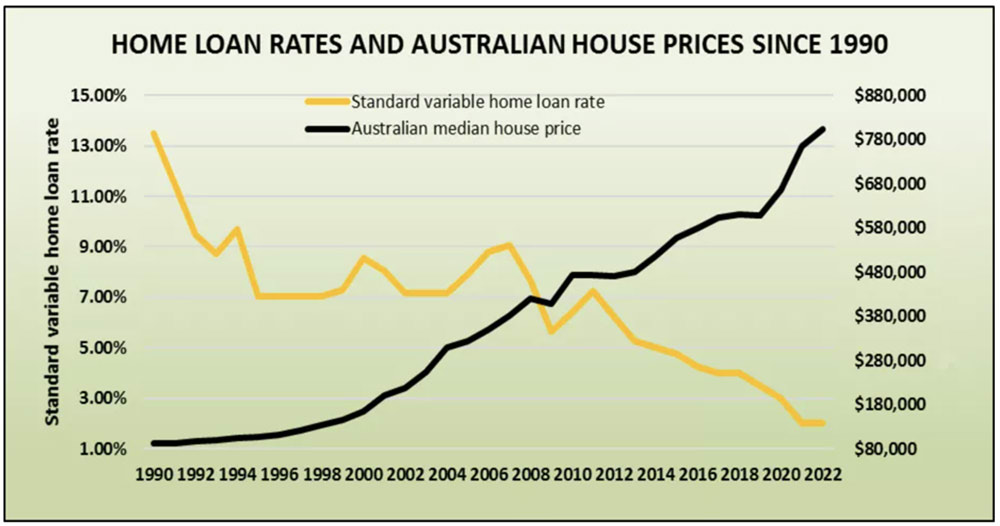
A clear inverse trend: Falling home loan rates fuel soaring Australian median house prices from 1990 to 2022 which you can significantly see from the chart above.
Renters are feeling the pressure: As landlords cope with rising mortgage costs, rents are going up.
Rising living costs and economic uncertainty have negatively impacted consumer confidence, thereby dampening the housing market. The Economic Domino Effect on Australia’s Property Landscape
Cuts in discretionary spending: Families are spending less on things like entertainment, travel, and eating out. This is hurting the retail and hospitality industries.
Investment Slowdown: High borrowing costs are making potential property investors hesitant to enter the market.
Strained Rental Market: The demand for rentals is increasing while rising costs worsen affordability issues.
Smart Strategies for Navigating Rising Costs
Refinancing Options: Homeowners looking to refinance can explore options to lock in lower rates or extend repayment terms, reducing monthly financial strain.
Financial Advice and Strategy: Mortgage brokers, such as OM Financial Services, can help guide clients to the best loan products and financial strategies tailored to their needs.
Government Support: Continued advocacy for policy measures, such as interest rate caps or subsidies for first-time buyers, could provide much-needed relief in the future.
Budget Management Tools: Households should adopt financial planning tools to track expenses, identify savings, and make informed decisions.
Are you struggling with rising costs? You don’t have to navigate this alone.
OM Financial Servicescan help you with smarter financial solutions, from refinancing to expert loan advice. Let’s work together to secure a future where your finances thrive.
Contact us todayand take the first step towards financial freedom!
Frequently Asked Questions
1. How does inflation affect mortgage rates in Australia?
Inflation can influence the RBA’s monetary policy decisions. Changes to the cash rate may affect mortgage rates, but the timing and extent of any change depend on lenders and loan products.
2. Do higher inflation and mortgage rates always reduce property prices?
No. Property prices are affected by multiple factors, including housing supply, demand, employment, population movements and borrowing capacity. Outcomes vary by location and property type.
3. Can refinancing help when household costs are rising?
Refinancing may help some borrowers improve their loan terms or repayments, but savings are not guaranteed. Fees, loan features and the total interest over the remaining term should be considered.
Disclaimer: This article provides general information only and is not financial, credit, property, tax or investment advice. Economic conditions and mortgage rates can change. Seek appropriate professional guidance before making financial decisions.